
The Nature of the Northwest (NW): Are you searching for the extraordinary beauty of mother nature in the United States? And are you longing for a fantastic hiking trip? If you say yes, it is time to discover this beautiful territory!
For a very long time, the Northwest (The Pacific Northwest in the North United States) has been well-known for its beautiful landscapes. Together with various spots for outdoor activities, the nature of the Northwest, especially sites for hiking, make this place globally attractive.
If you and your beloved are planning to have a trip to North America, then its magnificent coastlines, comfortable weather, and tranquil mountains are perfect for you!
Besides the beauty of mother nature, hiking is one of the most exciting activities that almost all tourists fall in love with. We would love to share with you 10 best hikes & camping in Pacific Northwest wilderness with today’s article. It is time to scroll down and discover!
The more you know, the deeper you will fall in love with this blessed territory. First of all, let’s have a more in-depth insight into the secrets that contribute to the Northwest nature’s reputation.
Key Takeaways
- Prepare for the weather: Because the weather in the Northwest can be unpredictable, it’s crucial to prepare for various types of weather. Bring rain gear, layers of clothing, and sunscreen.
- Check the trail conditions before you go: Before you go on a hike, check the trail conditions and make sure you have the proper footwear. Be prepared because certain trails may be muddy or covered in snow and ice.
- Leave no trace: When camping and hiking in the Northwest, it’s critical to follow the rules of leave no trace. Keep all garbage to a minimum, avoid disturbing wildlife, and stick to authorized pathways. (From Leave No Trace)
- Carry plenty of water: Staying hydrated is critical while hiking and camping in the Northwest. Carry lots of water, and if you intend to drink from streams or lakes, consider bringing a water filter or purification tablets.
- Be bear alert: Because the Northwest is home to black and grizzly bears, it is critical to be bear aware. Maintain good food storage, create noise while hiking, and carry bear spray.
- Know the rules and regulations: Before going camping in the Northwest, be sure you’re familiar with the area’s rules and regulations. Certain regions may require permits or have particular campfire laws.
- Bring a map and compass: Bringing a map and compass is always a good idea when hiking in the Northwest, as cell phone service may not be available in some areas.
- Consider the time of year: Hiking and camping in the Northwest can be greatly influenced by the season. In the winter, snow and ice can render some pathways unusable, while in the summer, high temperatures and flames can be a hazard.
- Observe proper campsite etiquette: When camping in the Northwest, proper campsite etiquette is essential. Keep noise levels low, respect the space of other campers, and avoid destroying vegetation.
- Prepare for emergencies: It is critical to be prepared in the event of an emergency. Carry a first-aid kit, a whistle, and a signaling device, and make sure someone knows where you’re going.
Northwest Forest: Recreational Passes & Permit
To begin your journey, you will need to choose which Northwest forest passes and permits, which is the most suitable for your creational location & activities. You can read more on this site for more Recreational Passes & Permit.
Annual Northwest Forest Pass
An annual pass honored at most Forest Service day-use sites in Washington and Oregon. It costs about $30 right now.
Motorcycle Decal Annual Northwest Forest Pass
An annual pass honored at most Forest Service day-use sites in Washington and Oregon.
Day Pass
A single day pass honored at most Forest Service day-use sites in Washington and Oregon.
Interagency Annual Pass
An annual pass which is honored nationwide at most Forest Service, National Park Service, Bureau of Land Management and US Fish and Wildlife Services day-use or entrance fee sites.
WA & OR Recreation Pass
Same benefits as the Interagency Annual Pass plus honored at: the 26 Oregon State Parks charging a day-use fee, 23 (of 120) participating Washington State Parks charging launch or trailer dump fees, and 6 Army Corps of Engineers sites charging day-use fees.
Preparation: What Equipments to Bring Along
Whenever and wherever you are going into the wild, it is extremely important to follow safety rules, as well as equip yourself with essential items.
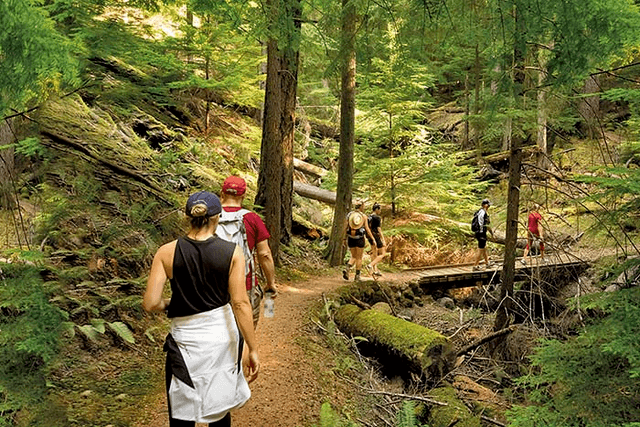
The Pacific Northwest is heavenly blessed with thousands of mountains and places for hiking. However, it also contains potential risks for hikers who are not well prepared.
Take a break from the noise and busyness of life by exploring the stunning Clearwater Wilderness. With hiking trails that lead to scenic views and pristine lakes, it’s perfect for outdoor enthusiasts looking for an adventure. Make sure to bring the proper equipment, such as backpacks, hiking boots, and camping gear to ensure a comfortable and enjoyable experience. Check out outdoor recreation rentals for affordable gear options.
Map
It is a must for every traveler. Equip yourself with a detailed topographic map of the hiking area. Also, check out the route carefully before backpacking. Rains may come, so you should store the map in a waterproof ziplock for use.
Compass
The compass is always needed to keep you on track. With a handy one, you can easily define your current location and directions during the entire trip. Also, remember to train your navigational skills beforehand.
Make sure you are properly equipped for your next camping trip by checking off everything on this camping checklist. From shelter to cooking supplies to first aid, this list covers all your camping essentials. Don’t end up stranded in the great outdoors without the necessary gear.
Sunglasses (and sunscreen)
Coming too close to the cliff or stumbling over the tree root can cause you unwanted injuries. Accidents will happen if you cannot see the trail or the obstacles. Hence, sunglasses are great for you to decrease glare. Besides, sunscreen helps immensely with the extreme sunlight.
Extra clothing and rain gear
The higher you are, the colder the weather gets. Also, it may come with strong, speedy winds. So you should protect and cover yourself with wool or polypropylene fabrics. Ignore cotton, as it cannot support in fighting against the extreme weather conditions up there.
And if you go in summer time, you can take good clothes for hot weather like hiking pants for summer and rain jackets, warm jacket, brimmed hat, and a sturdy hiking shoes.
Headlamp/flashlight
If there is any chance you get stuck and come back late to your car, a headlamp or a flashlight will definitely save your life! Prepare a high-quality one, check it again and again, and bring extra batteries.
First-aid supplies
In the woods and during the entire trip, you may be injured by accidents or be attacked by bees, ants, snakes, etc. Hence, protect yourself with the first-aid kit. Well-prepare and bring along other special medications.
Firestarter / Matches
If you want to signal your emergency case, fire is the most effective option. The atmosphere can get too humid, and therefore, don’t forget to prepare a candle or a lighter to be your firestarter.
Water and purification
Although the Pacific Northwest does not lack freshwater sources, drinking water from a river or stream without being purified may get you sick. Therefore, you should still prepare water container for camping and purification tablets to maintain health.
Knife / Multitool
A camping knife is important for slicing food, clipping bandages, and repairing gears. It is versatile, and therefore, it is highly recommended to bring with you one.
Extra food
The last item in our checklist today is extra food. Hiking takes a lot of energy from your body, and there are many unexpected situations you may encounter. So, prepare some extra food to provide your body with energy is always a smart choice.
If you’re looking to lose belly fat, check out our article on how to lose belly fat in 3 days. We also have a calorie calculator that can help you figure out your daily caloric needs. Remember, reducing your calorie intake is one of the most effective ways to lose weight.
Sturdy Shoes
Your footwear should provide support for non-slip, easy dry, protection from falling objects like rocks. They must have great traction on both wet and dry floors or surfaces. Please make sure to choose a proper shoes for long distance.
Other “essentials”
After preparing enough all the ten items above, you can also think of these essentials: emergency shelter (a lightweight two person tent), whistle, and insect repellent.
The Most Beautiful Nature Of The Northwest Territory In North America
The Northwest area is gifted with a beautiful nature. In this place, human beings and the environment get on well with each other. Together, they have set up unique ecosystems!
There must be essential features that bring the Northwest the most magnificent area in North America. Below are nine great strengths of this territory. Without any further ado, it is time for you to check out!
Coast
When it comes to the Pacific Northwest, we cannot mention its beaches and coastlines. For those in love with the sunset and sunrise above the sea, it is time for you to visit the site! In case you have not known yet, half of North America’s states and provinces with a beautiful stretched coastline are located in this area.
With a vast number of beaches, it is one of the most famous places for beach riding on beach cruiser for international travel lovers to watch whales and orcas. Besides, the fauna and flora systems under the sea are diverse, which emerges people in the beauty of heaven. Let’s have a look at other outstanding aspects of the Northwest area!
If you’re interested in joining the US Coast Guard, make sure to check out the Coast Guard height and weight requirement charts to see if you meet the qualifications. It’s important to be in good physical shape to be able to handle the rigorous demands of the job, and the charts can help you determine how much you need to weigh based on your height.
Desert
What do you think? To the east of Washington and Oregon, you can find deserts! The Northwest territory features two distinguishing landscapes in the two opposing sides: deserts in the eastern areas and beaches in the western.
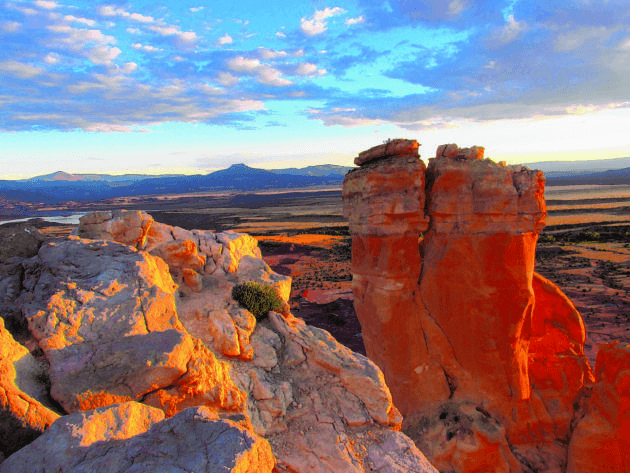
Stunning landscape from Georgia O’Keefe
If you think deserts are all about sands, cactuses, and lizards, then you probably have no idea about the deserts here. Georgia O’Keefe offers visitors shining landscapes with bold colors. They are charming with a very stunning look that will not fade quickly over time.
Once you are ready for the trip, you will experience how great it is here! Somehow you can see a few waterfalls outstanding from the background. Watching water falling from the sky is nothing but a piece of heaven!
A large number of painters and artists choose the place to gain their inspirations for their original pieces of art. This place would be a gift from mother nature for your artistic soul!
Rainforest
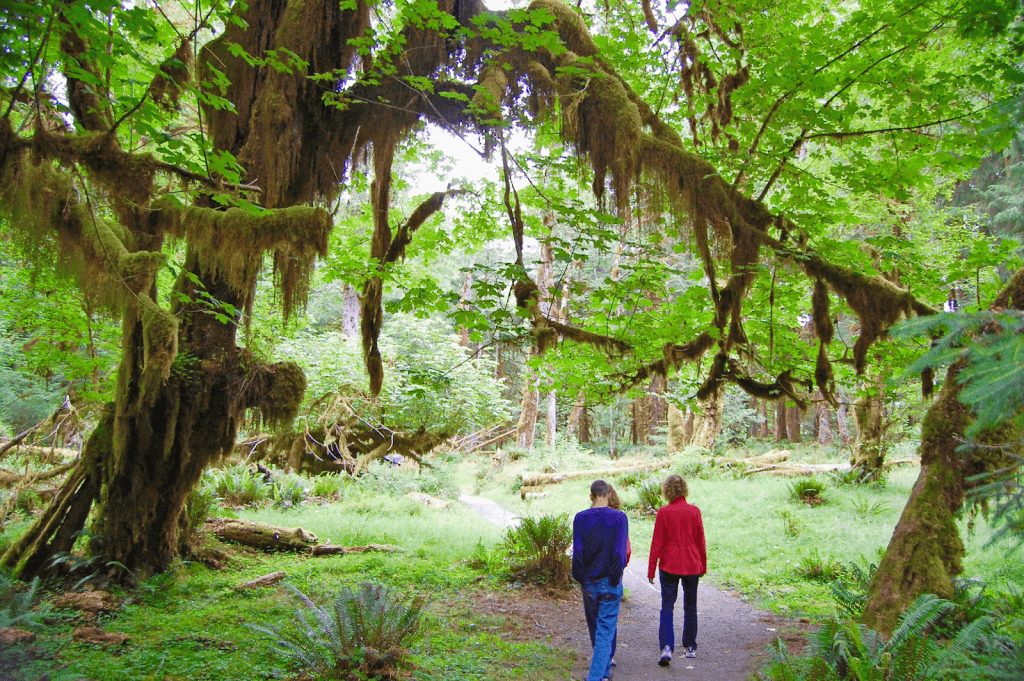
The Hoh rainforest
Above is one of the very few temperate woods remaining in the world. The Hoh Rainforest stretches from southeastern Alaska to the central coast of California. Currently, it is one of the most famous national parks in the United States.
The branches of trees are covered with dense and long moss and ferns. The forest remains intact from the early days, and this is an excellent place for watching the wildlife in Northwest territories!
And for those who concern the Northwest forest passes & permit, you shall contact the National Forest offices, visitor centers, or private vendors, via either in person or online. After that, you can get an annual pass at all forest service day-use or entrance fee sites. How convenient is it to visit famous woods in Washing and Oregon, don’t you think?
Explore the lush paths and winding trails of Bull of the Woods Wilderness Trails with Hood MWR’s guide. Take in the lush landscapes, pristine streams, and jaw-dropping views of this incredible stretch of rainforest that will leave you feeling one with nature.
National And State Recognition
Oregon and Washington features 17 national woods, 2 national volcanic monuments, a national scenic area, and grassland. Apart from these, they are also famous for a huge number of state parks and reserved national natural regions.
These national and state recognitions play an essential role in defining the beauty of the Northwest’s area, the wonderfulness over the locals’ judges, and remaining the original status of these areas from being destroyed by human beings.
Islands
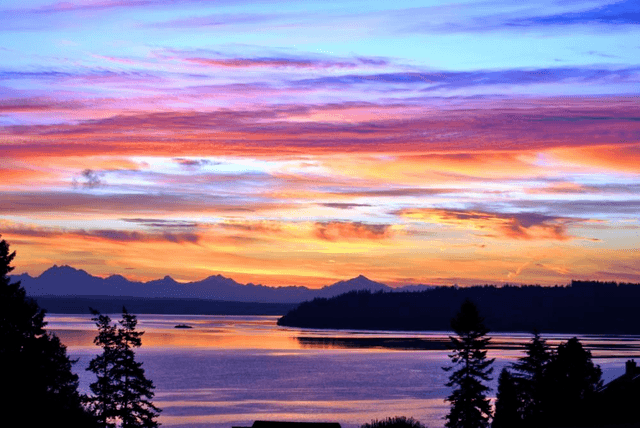
Whidbey, Camano islands
People cannot tell the exact number of islands in the Northwest area. There are at least a hundred islands. San Juan, Whidbey, Camano, Sucia, and Patos are extremely famous places for vacations.
Their natural beauty is mostly reversed because of their isolating location. If you are looking for a place where you can stay away from the bustling and hustling cities, these places are great for consideration.
On these islands, transportation seems to be limited. So, be ready for it! Instead, you and your family can spend more time together and on the beautiful nature.
For true island lovers, check out our article on 50 Spectacular Destinations: The Most Beautiful Places in the World where you can start planning your next tropical escape. From white-sand beaches to jungle-covered islands, there’s no shortage of choices.
Non-ocean Water
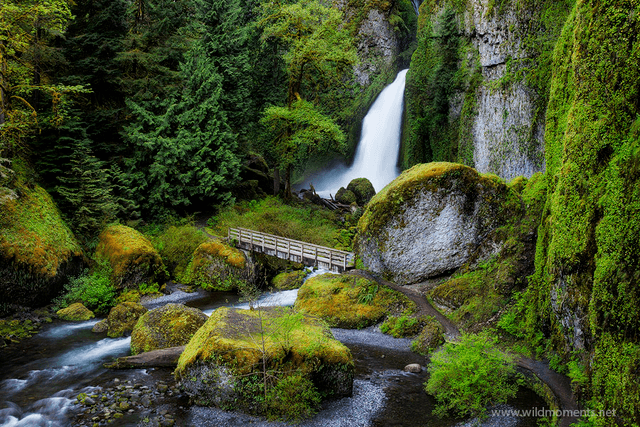
The Columbia River gorge
Up next, we are going to talk about waterways in the Pacific Northwest! With the five tallest waterfalls in America, this area will stun you away!
Besides, you can look for the Columbia River, together with its gorge, a national scenic place. Otherwise, Snoqualmie Falls is also very captivating and elegant for admiration.
Mountains
When it comes to the Pacific Northwest and recreational activities, hiking is very popular. And therefore, the mountains in the area are incredibly famous. They include the Cascade Mountains, the Coast Mountains, the Columbia Mountains, and Mt.Rainier, one of America’s highest peaks.
Anywhere you are planning to go, jagged mountains will be a part of your great journey! Keep yourself updated with the very next information to discover more exciting things! It’s great for mountain biking for athletes if you have your mountain bicycles already on the site.
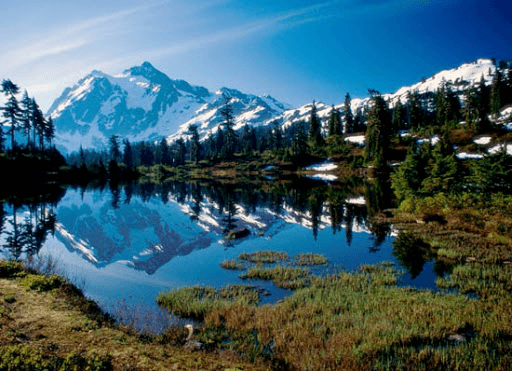
Cascade Mountains
Weather
Well, the temperate weather patterns in the Pacific Northwest influences the nature and landscapes within the territory in several ways. Not only does it devote to the captivating environment, but also it does enable people to hang out and enjoy the fresh air.
Weather places a crucial part of your stay and trip. No matter how gorgeous the scenes may have, all is useless with a continuously rainy series of days!
When experiencing 50-degree weather, it can be challenging to find the right outfit. Luckily, we have 35 great outfit ideas for women in 50-degree weather. From layering basics to stylish jackets and boots, this article covers all the fashion essentials to help you look your best during this chilly weather.
Environmental Sustainability
What’s here? Let’s spend some time talking about the intimate relationship between human beings and the nature of the Northwest! There is such a long way ahead in this journey! After we have a quick look at the Northwest territory with islands, seas, mountains, rivers, etc., we will mention the people’s green lifestyle.
Humans come with a revolution to protect mother nature and magnificent reserve landscapes. In the Pacific Northwest, people live in harmony with nature and promote environmental sustainability. Going green here is a predominant living style. With all of the green practices, residents show their high respect for the surrounding nature.
10 Best Hikes In Pacific Northwest Wilderness
As we mentioned earlier, recreational and outdoor activities are irreplaceable when living or traveling to the dreamy Pacific Northwest. There are a large number of activities for you to take part in, such as diving, whitewater rafting, sea kayaking, windsurfing, birdwatching, caving, and climbing.
With the famous systems of mountains, coastlines, waterways, and other natural elements, the Pacific Northwest is a dreamy land for those who are in love with outdoor adventures.
From watching different types of birds in the forest to discovering ranges of mountains, paths, and rivers, journeys are calling your adventurous soul! The closer you get close to nature, the more interesting and memorable your experiences will be.
If you really want a lively corner of the Pacific Northwest, then the best activity you can participate in is hiking. Panoramic views, beautiful landscapes, break-taking corners of the world will get you down to the true beauty of nature.
Before beginning the journey, you need to prepare suitable footwears, waterproof bags, maps, essential things, and friends for the hiking trip. And one more important thing to remember, pick up where to start the journey. If you are very new in hiking, then these ten best hikes in the Pacific Northwest will help you choose the perfect location to embark on a beautiful journey.
East End Of Rundle
Welcome to the very first hike of today’s recommendation list. When it comes to one of the most photogenic destinations, we cannot mention the East End of Rundle. It is located on the west side of Whitemans Gap above Canmore, Alberta, Canada.
You can drive your car and park it at Goat Creek. From there, just walk up the hill. The hiking trail begins at your left side, near Smith Dorrien road, Kananaskis Country.
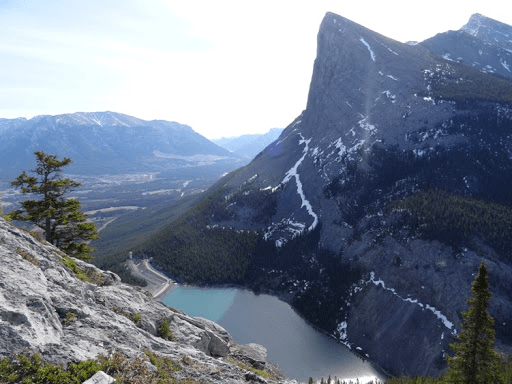
The East End of Rundle
This hike features a steep path with rock scrambles, accompanied with boulders along the way. The distance to fulfill the challenge is 3.6 miles out and back trail. In order to finish the trail, it is very challenging because the rail is so steep. For safety, there must be hiking poles so that you and your crew members can maintain balance and stably stand on the surfaces.
The secret behind people interested in the challenge is that it will bring about beautiful results. This place is worth your climb because the view of Ha Ling peak is majestic! Once you come higher above this viewpoint, you are going to see a panoramic view of the Bow Valley that surrounds you.
For detailed guidelines: Click on this link.
Mount Storm King
The next choice will surprise you! You will gain a break-taking view once conquering the top of the Mount King trail. The trail is 4.7 miles, relatively short in length, but up to 3000 feet in elevation!
To get there, drive on Highway 101 to the west from Port Angeles. The distance is about 20 miles. At the milepost 228, you need to turn right to the parking lot that is already registered for Lake Crescent and Marymere Falls. From there, walk 0.2 miles to the Storm King Ranger Station.
Located in the Olympic National Park, this hiking trail will offer you the best views! All of your efforts will be paid!
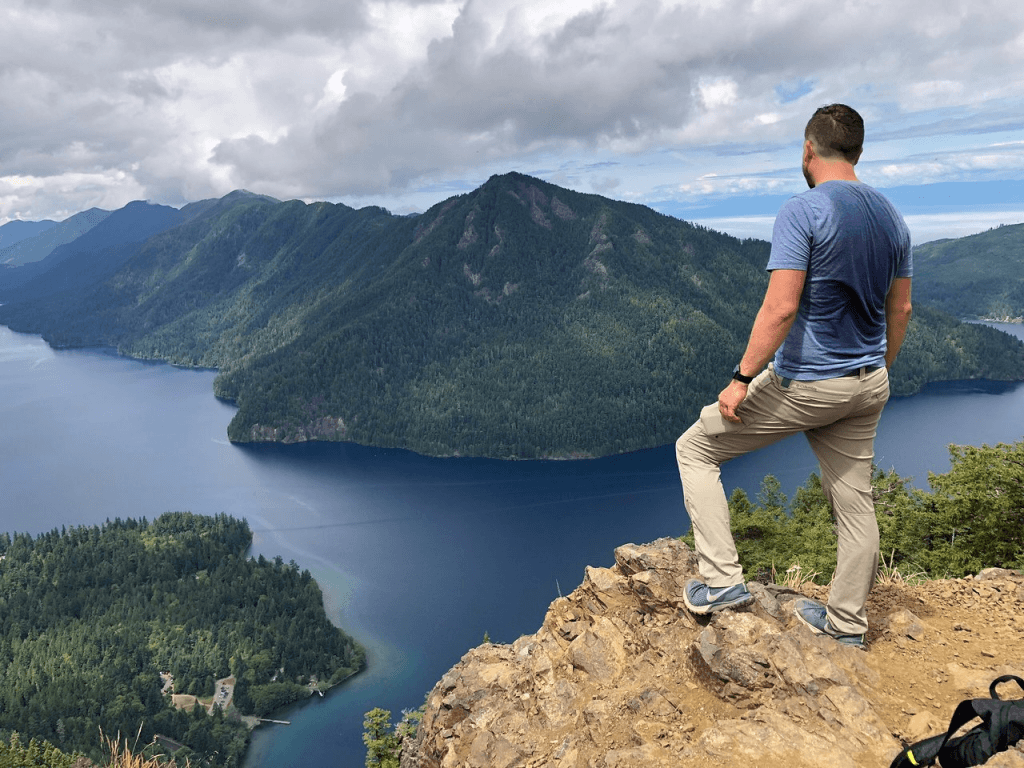
The Mount Storm King
To keep balance and come to the top successfully, you need the help from ropes attached to the mountainside. If you can make it to the top, you will finally enjoy the 360-degree panoramic views of the ranges and the lake Crescent.
It would be very risky and dangerous if you do not practice regularly, or stay fit because the whole trip is going to be challenging!
For detailed guidelines: Click on this link.
Valley Of Five Lakes
In Jasper National Park, Alberta Canada, Valley of Five Lakes is a highly-recommended place for hiking. The trail is easy and suitable for your beloved family.
From Jasper Townsite, you need to drive along the Icefields Parkway to the south out of town. Approximately 9 km along Highway 93, you will see the sign for the parking lot of the hiking site.
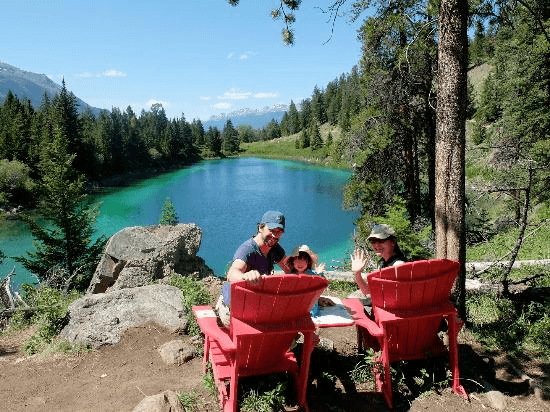
Valley of Five Lakes
While walking 2.8 miles along the trail during the summer, don’t forget to bring bug spray as they usually appear in that time! Generally, the trail is smooth except for some parts of high elevation. Also, there are many places to rest when you and your beloved get tired.
As its name suggests, the trail actually surrounds five separating lakes. Each of them features a different shade of color blue! Very beautiful and worth seeing!
For detailed guidelines: Click on this link.
If you are interested in exploring the geological wonders of the Pacific Northwest, be sure to check out the Okanogan Wenatchee National Forest. With over 4 million acres of land, there are plenty of mountains, glaciers, and volcanic formations to discover. Plan ahead and visit the National Forest Directory to ensure you find the perfect spot.
Colchuck Lake
What do we have next? Do you want to immerse yourself into the blue water of Colchuck Lake and enjoy the beautiful views? Here comes the Colchuck Lake. This is absolutely a fantastic choice for you to put in the checklist! Around the lake comes steep mountains that are awaiting you!
The trail is located in the Alpine Lakes wilderness area, in the proximity to Leavenworth, Washington. To get there, you need first turn onto Icicle Creek Road from US2 in the west of Leavenworth. After that, drive about 8.4 miles and turn left to the Forest Service Road 7601. Then continue driving 3.7 miles along the potholed road to the Stuart Lake trailhead.
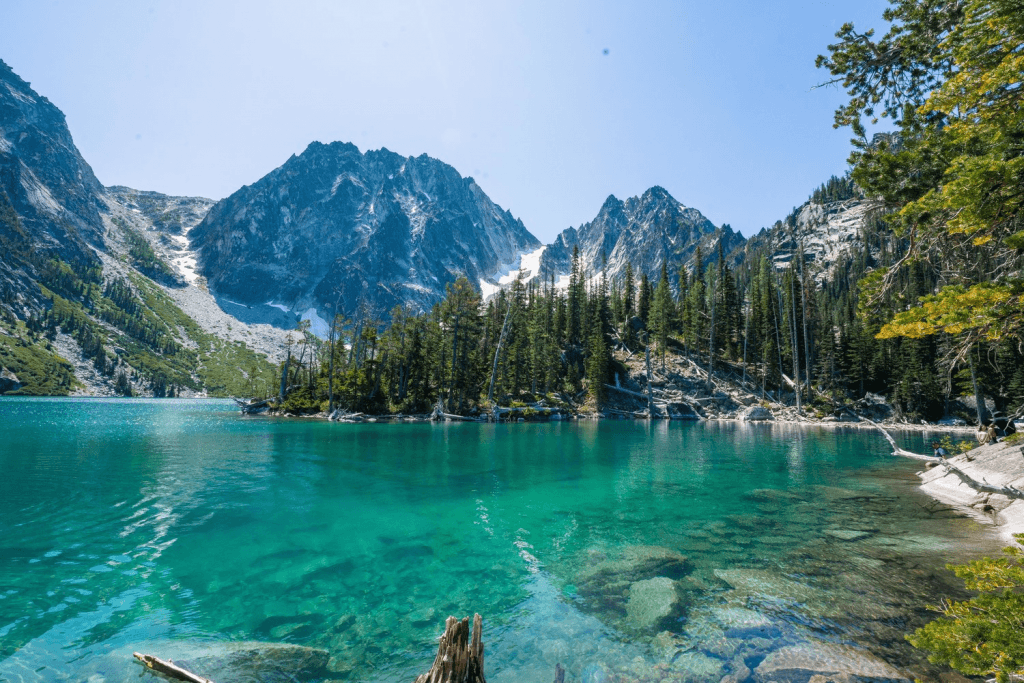
Colchuck Lake
This trail is suitable for you to visit at different times of the year. For the best scene ever, don’t miss your morning call and remember to bring a headlight!
With a distance of 8 miles, here comes your chance to promote health and enjoy the landscape. During the tough trip, you will need to pay attention to rocks, exposed tree roots, and boulders. The day hike will surprise you with glacial-fed lakes!
For detailed guidelines: Click on this link.
Heather Lake
To get there, first keep driving on Quarry Road until you see a stop sign, then turn left onto the Mountain Loop Highway. Within the next 10 miles, you can stop at the Verlot Ranger Station to get a Northwest Forest Pass. Continue to drive 1 mile, cross a blue and gray bridge, turn right to the Pilchuck Access Road, FR 42. 1,4 miles from there, can you see the parking area for the Heather Lake trail!
If you are going to go hiking in Mt. Pilchuck State Park, consider the Heather Lake trail! With a 4.6 mile out-and-back hike, the trail is moderate for you. Still, ready to face slippery rocks and all-year-round snow on the top.
There is a lot not to miss: trees covered with moss, hidden lakes, morning fog! The hike will offer you and your mates perfect views! The trail is suitable for one-day hikes.
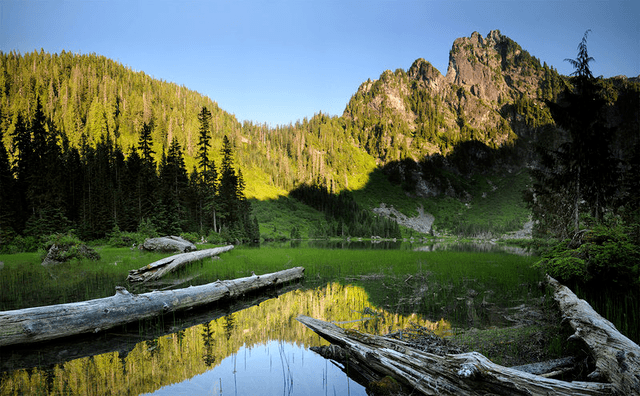
The Heather Lake trail
After conquering the Heather Lake trail, you can challenge yourself with various trails which are close to the Mountain Loop Highway: Lake Twenty-Two, Glacier Basin, Monte Cristo Ghost Town, and so on.
For detailed guidelines: Click on this link.
Hurricane Ridge
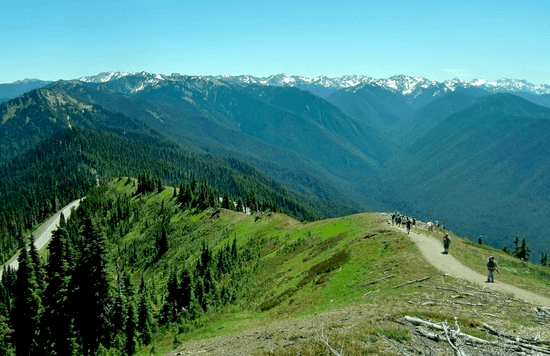
The views from Hurricane Ridge
If you are eager to watch the magnificent sunrise and sunset with family, this hiking trail is worth trying. The total of 8 miles hiking, which is quite comfortable in the Olympic National Park, is waiting for you.
It is located 20 miles from the city of Port Angeles. Driving from the city will take approximately 40 mins. Drive 1.2 miles along Race Street, then snag map and park pass in the Olympic National Park Visitors Center and Wilderness Information Center. After that, keep driving 18 miles on the Hurricane Ridge Road to the Hurricane Ridge Visitors Center. Then drive 1.5 miles to reach the trailhead parking lot.
But remember its opening time. During summer, it stays open all day. However, during the winter months, Sats and Suns are your only options, and the access to the rail is up to the weather, though.
On the Olympic Peninsula, this place is said to be one of the most beautiful Washington Winter hikes. Hence, spending weekends there is nothing but excellent!
For detailed guidelines: Click on this link.
Cape Flattery
People often say this place is just like an island for you to discover? Also located on the Olympic Peninsula, this is one of the United States’ most northwest areas. To enter the site, you need to get a Makah Reservation Pass beforehand.
If you start at Port Angeles, you need to drive 5 miles on Highway 101 to the west. After that, turn onto Highway 112 west and go further for 64 extra miles to reach Neah Bay. Drive 1 mile on Bayview Avenue, turn left on Fort Street, turn right on Third Street, then left on Cape Flattery Road. Keep drive to the end of the road, and you will see a huge parking lot for the hiking site.
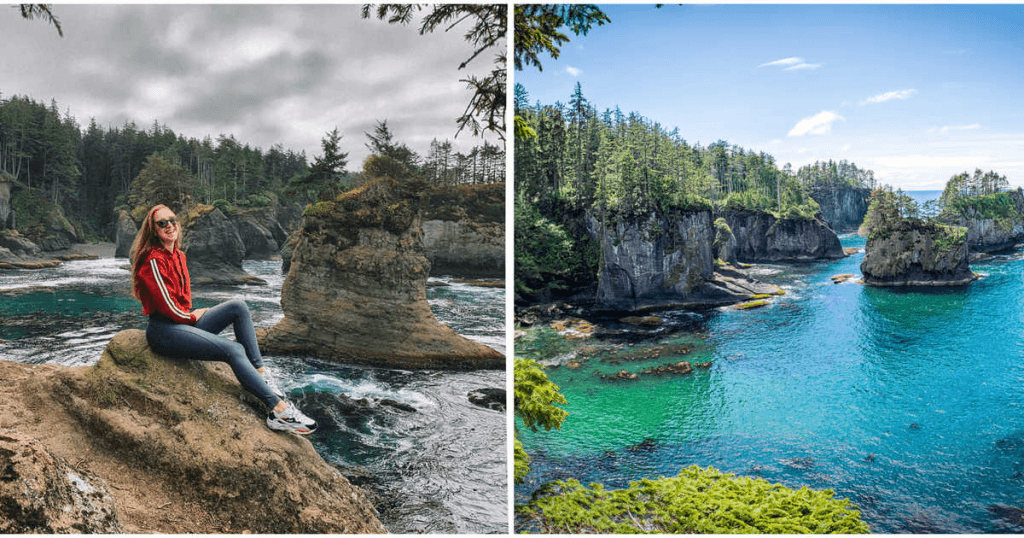
Cape Flattery
Cape Flattery features a comfortable, boardwalk-lined trail and plenty of sea stacks. Also, don’t forget to bring your camera! Different stops for you to gain various views in just one photo, from the sea to the mountain! It seems fantasy, right?
As mentioned earlier, the hike is relatively easy, with only 1.5 miles. No risk, no danger! Hence, you are going to be back home with full, happy, and content memories with your beloved!
For detailed guidelines: Click on this link.
La Push Second Beach Trail
Let’s get started from Highway 101. Then drive to the intersections of Highway 110 and 101, and go 1.5 miles to the north of Forks. Then, you need to turn on to Highway 110 and go for 12.5 miles to the Second Beach trailhead. You can have amazing rides on your bicycles for amazing beach rides.
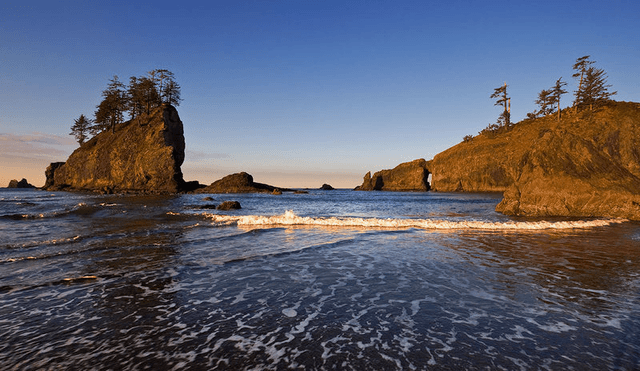
The La Push Beach
Are you ready to know more? If you want to admire the glamorous sunshine and sunset on the sea, you are going to find La Push Beach trails smart choices! These hikes feature different levels, from easy to difficult. The difficulty level depends on which part you will be in: First Beach, Second Beach, Third Beach.
When coming to the First Beach, you can watch a drive-up view. The seashore is very rocky! The Second Beach provides massive logs washed up onshore. In order to camp here, there is a must to have the beach camping permits. And finally in the Third Beach, you will see the coastal rainforest.
Right outside of La Push town, you can easily witness the outstanding nature of the Northwest.
For detailed guidelines: Click on this link.
Rattlesnake Ledge
What do we have next? In Seattle, this choice for hiking is one of the most famous. The Rattlesnake Ledge is in close proximity to the city, so it can be crowded in the summertime. If you want fun hiking with friends and a group of people to chit chat with, this option will be satisfying.
Drive east on I-90 from Seattle and then exit 32 for 436th Avenue SE. After that, make a right turn to 436th Avenue SE, go 4 miles ahead to meet the trailhead parking lot.
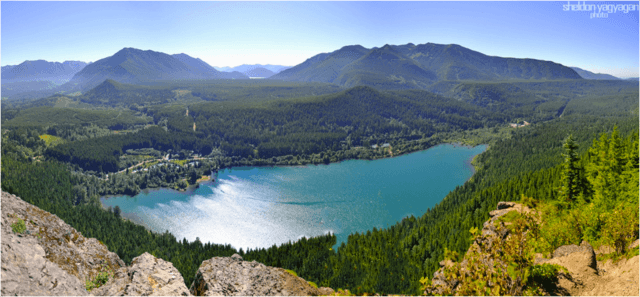
Rattlesnake Ledge
When you look down from the top, you will see an iconic view. The hike offers you the beauty of mother nature with dense woods, astonishing cliff edges, and a beautiful lake at the trailhead.
The trail features 4 miles of walking and climbing. The closer you get to the top, the higher the elevation gain! However, the difficulty level of this challenge is just moderate.
If you find yourself interested, prepare a trip to visit Snoqualmie Region and go hiking in this popular destination!
For detailed guidelines: Click on this link.
Hole-in-the-wall
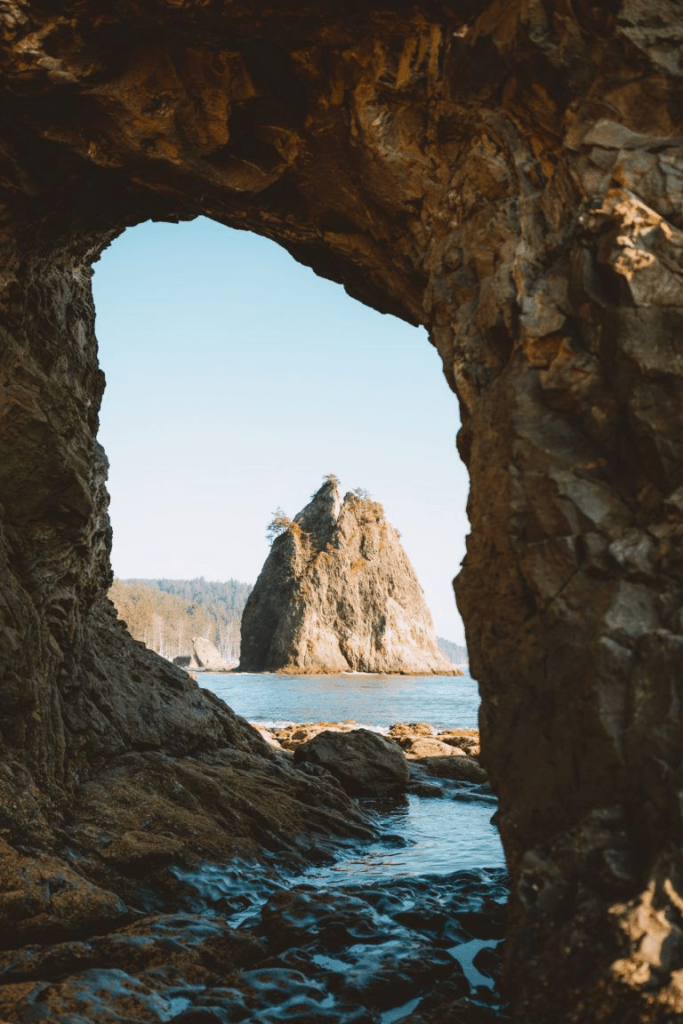
Hole-in-the-wall
Are you looking for something even stranger? The hike of Hole-in-the-wall is a renowned one among people in the coastal areas of Washington. It is located in the Olympic Peninsula, Pacific Coast.
To get there, take a drive of 55 miles on US-101 to the west. After that, turn onto SR-110 and drive to the west for 7.7 miles. Then make a right turn on Mora road and drive for 5 more miles. At the end of the road comes the hiking trailhead.
What are you going to see? Impressive sea stacks and walls of rock formations. They together highlight your experiences with the trip. The rail is easy but remember to watch out the tide. It can rise while you forget to have a look at it!
And because it includes sea views at a very close proximity, always ensure your safety! To conquer this 40-mile hike, prepare good health and friends to have the most beautiful trip! Also, the weather can be changeable, hence, check it out before choosing the day to hike.
Close to the trailhead comes a kind of rock formation, and that is the thing giving it the literal “hole-in-the-wall.” As you can guess from the picture above, the place features a hole through an arch. It is also great for taking photos!
The wonderful thing is that you do not need to worry about raising elevation. The only thing to do is keep yourself and your team safe by checking the weather pattern and always pay attention to the tide level!
For detailed guidelines: Click on this link.
If you’re planning to cycle around places like Hole-in-the-wall, North-western United States, consider getting a Raleigh Bike for smooth and efficient navigation. Learn more about the full brand overview to get the right fit and gear before your trip. Check out Raleigh Bikes Review: The Full Brand Overview for more information.
Frequently Asked Questions
How Can I Register For The Nature Of The Northwest Permit & Pass? And What Visitor Information Center Can I Come To?
In general, passes and permits are concerned when you decide to go hiking in the Northwest. It is up to what kind of places you are going to visit: national parks, service lands, state public lands, or so.
For the national forest recreation day pass and epass, you can purchase online or at the National Forest offices and the Visitor Information Center close to your hiking trailhead.
You can get an annual pass at all Forest fee sites in Oregon and Washington for Northwest Forest Pass. Otherwise, you can purchase one at the National Forest offices.
Can You Tell Me More About The National And State Recognition In The Northwest?
Oregon and Washington features 17 national woods, 2 national volcanic monuments, a national scenic area, and grassland. Apart from these, they are also famous for a huge number of state parks and reserved national natural regions.
These national and state recognitions play an essential role in defining the beauty of the Northwest’s area, the wonderfulness over the locals’ judges, and remaining the original status of these areas from being destroyed by human beings.
What Is The Weather Like In The Pacific Northwest?
The temperate weather patterns in the Pacific Northwest influence the nature and landscapes within the territory in several ways. It is devoted to the captivating environment, but it also enables people to hang out and enjoy the fresh air.
Weather places a crucial part of your stay and trip. No matter how gorgeous the scenes may have, all is useless with a continuously rainy series of days!
Can You Tell Me Some Safety Rules Before Taking The Hiking Trip?
Before introducing the equipment needed for a hiking trip, it is important to check out these five safety rules.
Firstly, choose a suitable trail, which means you should pick the trail meeting your expectations and capability. Secondly, remember to monitor the trail’s current conditions before the trip because unawareness can even lead to hazardous risks.
Third, ensure your family, friends, or someone else knows when you’re back so that they can call for help in case of an emergency. Also, don’t forget to check out the weather pattern because any changes in the weather condition may cause you trouble.
Finally, it is important to beware of the season as safety rules in your hiking trail may vary according to a specific time of a year.
Conclusion
What are you up for? A fun, memorable, or unforgettable experience in the Pacific Northwest. As we have discovered so far, the nature of the Northwest is blessed with hundreds of exciting things to learn: From the waterways, seas, islands, mountains, deserts to the residents’ green living style and weather! For us, the most valuable thing here is that people are still in a close and intimate relationship with mother nature. Time has gone, and thousands of years flies. But here, we always find nature remaining intact!
Great outdoor activities there are waiting for you. And one of the most favorite and widespread experiences of tourists when coming here is with hiking. However, if you are a beginner, then there is a chance that you are confused about what you need to look for and where it is safe to conduct the adventure. With our today’s sharings and points of view, we hope somehow you feel better and relaxed. Everything needs the first step to move! And here you are! Thank you for reading, and we hope you will have a great trip to the Pacific Northwest in the near future. Great to see you there!
